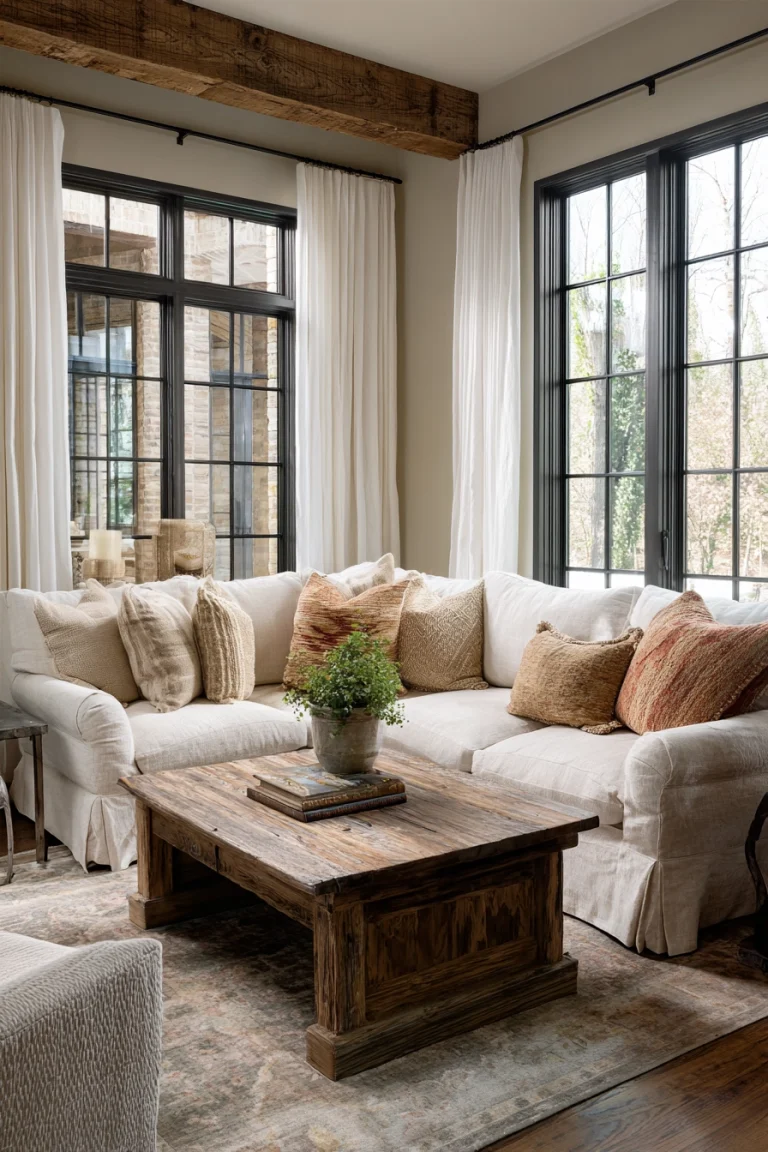
What to Use Instead of an End Table: 12 Ideas
An end table is handy, but it is not the only surface that works beside a sofa. If your living room feels cramped, your budget is tight, or your sofa sits flush against a wall, you have plenty of options.
This guide covers 12 end table alternatives and matches each one to the problem it solves. You will also learn how to size, style, and place each substitute so it looks like furniture, not a placeholder.
Bottom line up front: You can replace an end table with any stable surface at seat height, from a C-table that slides over a sofa arm to a wall shelf, stool, or stack of books. Match the substitute to your biggest constraint first: floor space, budget, or tools. A C-table wins for tight seating, a floor lamp with a built-in shelf wins when you have zero floor space, and a stool wins on price.
What Counts as an End Table?
An end table is a small surface-height table placed beside a sofa or chair to hold a lamp, drink, or book. A side table is the broader category that includes it.
That distinction matters when you shop. Search for “side table” and you get nightstands, accent tables, and drink tables mixed in. Search for “end table” and you get pieces sized for the end of a sofa.
End Table vs Side Table vs Coffee Table
A coffee table sits in front of the sofa at roughly 16 to 18 in high. An end table sits beside the sofa at roughly 24 to 26 in high, close to the top of the sofa arm.
Side table is the umbrella term. It covers end tables, nightstands, C-tables, pedestals, and any small table you place next to a seat. If you are comparing an end table vs side table, think of the end table as one job title within a wider field.
The Three Jobs an End Table Does
Every end table earns its spot by doing at least one of three jobs. Knowing which job matters most to you makes choosing a substitute much easier.
- Holds a light: a table lamp at seat height so you can read without overhead glare.
- Holds a drink or snack: a stable, easy-to-reach surface that will not tip.
- Holds everyday clutter: remotes, glasses, a phone, a book, and the small things that pile up.
If you only need one of those jobs, you can skip the table entirely. A clamp-on cup holder handles drinks. A wall sconce handles light. A felt basket handles clutter.
Why You Might Skip One Entirely
End tables eat floor space on both sides of a sofa, and in a small room that space is often better used for traffic flow. A living room with no end tables can feel more open and easier to walk through.
They also cost money in pairs. Two matching tables plus a lamp on each can add up fast. For a fraction of that, you can solve the same three jobs with pieces you may already own.
If you do decide a real table is worth it, our guide to the best living room end tables covers styles, sizes, and finishes.
Quick Picks: Best End Table Alternatives
The best substitute depends on whether you are short on floor space, budget, or tools. Here is the fastest way to narrow it down before you read the full list.
| Your Constraint | Best Alternative | Why It Works |
|---|---|---|
| Tiny space, sofa against a wall | C-table | The base slides under the sofa so the top hovers over your lap |
| Renting, no drilling allowed | Nesting tables or a floor lamp with a shelf | Both are freestanding and move with you |
| No tools, no assembly | Stacked books or a crate | Zero building, zero hardware |
| Tightest budget | Stool or plant stand | Often the cheapest stable surface at seat height |
| Zero floor space | Wall-mounted shelf | Frees the floor completely |
Best for Tiny Spaces
A C-table is the top pick when the gap beside your sofa is narrow. Its C-shaped base tucks under the sofa frame, so the top sits over the seat rather than beside it.
Best for Renters
Nesting tables and floor lamps with a built-in shelf need no drilling and no landlord approval. They also pack flat when you move.
Best No-Tools Option
A stack of large hardcover books or a sturdy wooden crate becomes a surface in seconds. No hardware, no instructions, no cleanup.
Best Budget Option
Stools, plant stands, and garden stools are usually the least expensive stable surfaces you can buy. Many cost less than a single end table.
What to Use Instead of an End Table
You can replace an end table with any stable surface at seat height, from a C-table to a stack of books to a wall shelf. Here are 12 end table alternatives, each matched to the problem it solves best.
C-Tables and C-Shaped Accent Tables
A C-table solves the “no room beside the sofa” problem. The C-shaped frame slides under the sofa base so the top floats over your lap or the seat cushion.
This is the single best end table alternative for tight seating. You get a full drink surface without giving up a single inch of floor beside the sofa. Most C-tables sit around 24 to 26 in high, which lines up well with standard sofa arms.
Choose one with a lip or raised edge if you plan to eat on it. A flat top with a slick finish will let a glass slide when someone bumps the sofa.
Nesting Tables
Nesting tables give you two or three surfaces in the footprint of one. You pull out the smaller tables when guests arrive and tuck them away when you are done.
They are a strong choice for renters and for rooms that shift between everyday use and entertaining. Look for a set where the tallest table lands near your sofa arm height so it can hold a lamp.
The trade-off is stability. Nesting tables are usually lighter than a solid end table, so keep heavy lamps on the largest piece and avoid leaning on the smaller ones.
Floor Lamps With a Built-In Table or Shelf
A floor lamp with a built-in table or shelf is the best answer when you have zero floor space to spare. One footprint delivers both light and a landing surface.
These lamps usually include a small round tray or a narrow shelf partway up the pole. That ring holds a drink, a phone, or a small plant. You get the two most important end table jobs from a single item.
Check the base weight before you buy. A tall lamp with a light base can wobble, and a wobbling lamp with a drink on it is a spill waiting to happen. Also confirm the shelf height clears your sofa arm.
Ottomans, Poufs, and Cube Storage
An ottoman or cube storage unit works as both a seat and a surface. Add a firm tray on top and it becomes a proper end table substitute.
Cube storage is the practical pick because it hides clutter. Baskets or bins inside hold remotes, chargers, and throws, so the top stays clear for a lamp or drink. A pouf is softer and lighter but needs a rigid tray to hold anything with liquid in it.
For a small apartment, a storage ottoman next to the sofa does three jobs at once: extra seating, hidden storage, and a surface. That is hard to beat on value.
Plant Stands, Pedestals, and Garden Stools
A plant stand, pedestal, or ceramic garden stool makes a slim, stylish end table alternative. These pieces are narrow, so they slip into gaps a full table cannot fill.
Garden stools are especially useful because they are weatherproof, easy to wipe clean, and often come in glazed finishes that add color. Many sit around 17 to 19 in high, which is lower than a standard end table, so check the height against your sofa arm first.
Pedestals tend to be taller and narrower. They suit a small lamp or a vase better than a full drink setup. If you need a stable drink surface, pick a garden stool with a flat, level top.
Wall-Mounted and Floating Shelves
A wall-mounted shelf frees the floor completely, which makes it the best choice for a living room with no end tables and no spare inches. You mount it at the same height as a table top, roughly 24 to 26 in.
Floating shelves look clean and modern, but they have limits. A shelf holds a lamp, a drink, and a book, but not a heavy stack. Always anchor into a stud or use proper wall anchors, because a shelf that pulls out of drywall takes everything on it down with it.
Renters should check the lease before drilling. Removable adhesive shelves exist, but most hold only a few pounds, so keep them to lightweight decor.
Sofa Arm Trays and Clamp-On Cup Holders
A sofa arm tray or clamp-on cup holder turns the sofa itself into the surface. These are the cheapest fix and the fastest to install, often with no tools at all.
A flat arm tray spans the sofa arm and gives you a spot for a mug, remote, and phone. A clamp-on cup holder grips the arm edge and holds one drink securely. Both work well when the gap beside the sofa is too narrow for any table.
Measure your sofa arm width and thickness before ordering. Trays are sized for specific arm shapes, and a flat-sided arm fits differently than a rolled arm.
Baskets, Crates, and Stacked Books
A sturdy basket, a wooden crate, or a stack of large hardcover books can serve as a surface in a pinch. Flip the basket or crate upside down so the flat base becomes the top.
Stacked books work best when they are wide and heavy. Line up the spines, keep the stack under about 20 in, and top it with a tray so the surface is level and stable. A wobbly stack is a spill risk, so test it with a full glass before you trust it.
This is the best zero-cost option because most homes already have the materials. It is also the least permanent, which suits a temporary layout while you save for something better.
Stools and Small Benches
A stool or small bench is the most versatile end table substitute because it can also be seating. Pull it over when a guest arrives, then push it back beside the sofa.
Look for a stool with a flat, solid top rather than a saddle or curved seat. A flat top holds a tray and a lamp without tipping. Wood, metal, and ceramic stools all work; pick the material that matches your other furniture.
Small benches suit the space behind a sofa or at the open end of an L-shaped sectional, where a standard end table would block the walkway.
Drink Ledges and Console Tables Behind the Sofa
A narrow console table behind the sofa adds a full-length surface without using any side space. A drink ledge does the same job in a slimmer profile.
This setup works well in open-plan rooms where the sofa floats in the middle. The console defines the back of the seating area and gives every seat a place to set a drink. Keep the console top at or just below sofa back height so it does not block sightlines.
If you are working with a compact footprint, our small sitting room ideas show how a slim console and a floating shelf can replace a full table pair.
How to Choose the Right Substitute
Match the substitute to the height of your sofa arm, the width of your gap, and what you actually set down each day. Get those three right and almost any option on this list will work.
Measure the Height and Clearance First
Measure from the floor to the top of your sofa arm. That number is your target surface height, and most sofa arms land between 24 and 26 in.
A surface more than about 2 in above or below that range feels wrong to reach for. Next, measure the gap between the sofa and the wall or the next piece of furniture. If the gap is under 12 in, a C-table or a wall shelf will fit better than a standard end table.
Decide What the Surface Needs to Hold
Write down what actually lands beside your sofa in a normal week. A lamp and a drink need a wide, stable top. A phone and a remote need only a small ledge.
This step stops you from overbuying. If you never set down a drink, a slim wall shelf or a clamp-on holder solves everything for very little money.
Check Traffic Flow and Walkways
Leave at least 30 in of clear walking space in main paths and about 18 in in secondary ones. End tables are a common cause of bruised hips because they narrow a walkway by a foot or more.
This is where alternatives shine. A wall shelf, a clamp-on cup holder, and a C-table all keep the floor clear, so your walkway stays wide.
Factor in Weight and Stability
Anything holding a lamp needs real stability. A tall lamp on a light stool or a soft pouf will sway, and a swaying lamp can fall.
Push-test any substitute before you trust it. Give the top a firm nudge with your hand; if it rocks or slides, add felt pads, move it to a wall, or choose a heavier piece.
How to Style an End Table Alternative
Treat the substitute like a real end table by grounding it with a lamp, a tray, and one vertical element. Styling is what separates intentional furniture from a stand-in.
Use a Tray to Define the Surface
A tray instantly makes a stool, crate, or ottoman read as a designed surface. It corrals small items and gives the eye a clear edge to read as a table top.
Pick a tray with a slight lip so glasses do not slide off. Round trays soften square furniture, and rectangular trays bring order to a round stool.
Add Height With a Lamp or Plant
Height is what makes a surface look purposeful. A small table lamp or a medium houseplant gives the substitute a vertical line that anchors it in the room.
Keep the lamp shade below eye level when you are seated. That way the light stays out of your eyes and the piece stays in proportion with the sofa.
Keep the Scale Proportional to the Sofa
Scale matters more than style. A tiny stool beside a deep three-seat sofa looks lost, and an oversized piece crowds the seat.
As a rule, aim for a surface top that is roughly one-third to one-half the height of your sofa back. That ratio keeps the piece visually connected to the seating.
Do End Tables Need to Match?
No, end tables do not need to match each other or the coffee table. Shared wood tones, finishes, or metal legs create enough visual link to look deliberate.
Matching sets read formal and traditional, while mixed pieces read collected and relaxed. If you want a coordinated look without a matching set, repeat one material rather than one exact product. You can see how this plays out in real rooms in our guide to small lounge ideas.
DIY and No-Tools Ideas
A crate, a stacked set of books, or a ready-made base with a top you supply can become an end table without any building. You do not need a workshop to solve this.
No-Tools End Table Ideas
These options need nothing but your hands. Each one takes under five minutes to set up.
- Flip a wooden crate upside down and top it with a tray.
- Stack four to six large hardcover books and level them.
- Set a round tray on a ceramic garden stool.
- Clip a cup holder onto the sofa arm.
- Place a woven basket upside down beside the chair.
End Table Bases Without Tops
End table bases without tops let you choose your own surface and size. You buy the base, then add a top that matches your room.
This is useful when you need an unusual height or shape. A metal hairpin base, a turned wood pedestal, or a simple drum base all work. Just check the base’s weight rating and make sure the top overhangs evenly on all sides.
End Table Top Ideas
Good end table top ideas include a round wood slice, a slab of marble or quartz remnant, a thick glass round, or a painted board cut to size.
Match the top material to how you use the space. Wood and laminate handle daily drinks well. Glass looks light but shows every fingerprint. Stone is heavy and stable but needs a base that can carry the load.
Simple DIY Builds for Beginners
A basic end table is one of the easiest first woodworking projects. It needs only four legs, an apron, and a top, and most hardware stores will cut the wood to size for you.
Start with a square top around 18 to 20 in wide and legs cut to your measured sofa arm height. Sand the edges, prime, and paint. If power tools are not for you, a ready-made base plus a cut top gives you most of the same result with far less effort.
For sizing inspiration before you build, browse these end tables for small spaces and note the heights and widths that fit your room.
Frequently Asked Questions
These answers cover common questions about side table substitutes, rooms without end tables, and whether tables need to match.
What Can I Use Instead of a Side Table?
You can use a C-table, a stool, a plant stand, a floor lamp with a built-in shelf, an ottoman, a wall shelf, or even a sturdy stack of books. Any stable surface near seat height works as a side table substitute. Pick the one that fits your gap width, your budget, and what you set down each day.
What Do You Do If Your Living Room Has No End Tables?
Start by giving each seat one landing spot for a drink, lamp, or remote. A C-table slides over a sofa arm, a floor lamp with a shelf adds light and storage in one footprint, and a wall shelf frees the floor completely. You do not need a matching pair to make the room work.
Do End Tables Need to Match the Coffee Table?
No, end tables do not need to match the coffee table. Shared finishes, wood tones, or metal legs create enough connection to look intentional. Matching sets read formal, while mixed pieces read collected and relaxed. Keep scale and height consistent instead of chasing an exact match.
What Is the Difference Between an End Table and a Side Table?
A side table is the broad category for any small table placed beside seating, and an end table is one type within it. End tables usually sit at the end of a sofa and come in standard heights of about 24 to 26 in. Side tables also cover nightstands, accent tables, and drink tables.
What Can I Use Instead of an End Table in a Small Apartment?
Use pieces that do double duty or take up no floor space. A nesting table set, a storage ottoman, a wall-mounted shelf, or a floor lamp with a table ring all work well. A C-table is the best pick when your sofa sits tight against a wall.
How Do I Style an End Table Alternative so It Doesn’t Look Temporary?
Ground the surface with a tray, add one vertical element like a lamp or plant, and keep the scale close to your sofa arm height. A tray turns a stool or crate into a deliberate piece of furniture. Repeat one finish or color from elsewhere in the room to tie it in.
Which End Table Alternative Fits Your Room?
Pick the substitute that solves your biggest constraint first, whether that is space, budget, or tools, then style it so it reads as intentional furniture. A C-table fixes tight seating, a floor lamp with a shelf fixes zero floor space, and a stool or crate fixes a tight budget.
Measure your sofa arm height and your gap width before you buy anything. Those two numbers will point you to the right end table alternative in seconds, and a simple tray plus a lamp will make it look like it was always meant to be there.